 Save this storySave this story
A woman walked into the Fragrance Vault with one request: She wanted her mother back. She didn’t know her mother’s perfume’s name or the shape of the bottle, only the way it made her feel. “I was little, and she would leave for work, and the lingering scent was how I knew she had kissed me goodbye,” she told Jana Menard, the shop’s owner and guardian of its thousands of bottles. They began the search. Ten scents. Then 20. “I kept asking questions, not about the perfume notes, but about her mother,” Menard recalls. “What did she do? What time did she leave? What did she wear? Did she drink coffee? Was she a hugger?” Those details guide the nose as much as any ingredient list, Menard says.
When the woman finally smelled the right one—White Camellia by St. John—she didn’t speak or cry. She simply held the blotter to her face and breathed in, as if the years since her mother’s death had quietly fallen away. “That’s when I knew we found it,” Menard says. “It’s not about accuracy. It’s about recognition.”
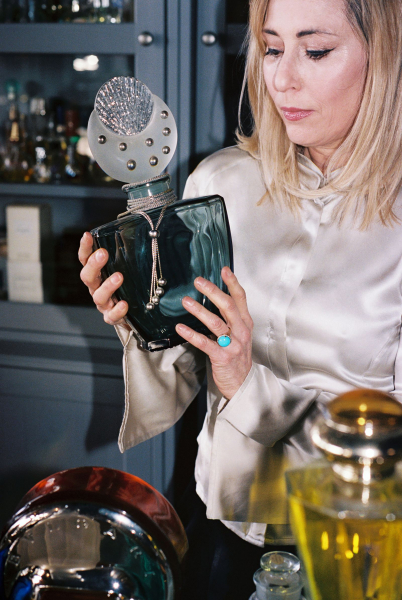
Jana Menard, owner of The Fragrance Vault, inspects just a few of the oversized bottles in her extensive collection.
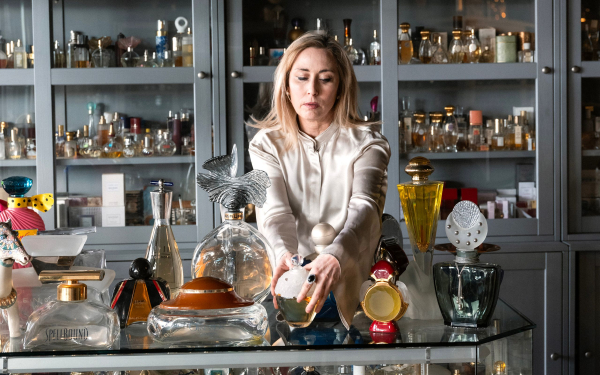
That kind of recognition is why people find their way to the Fragrance Vault, tucked at the base of Heavenly Mountain in South Lake Tahoe, in an unassuming shopping plaza among a FedEx, a nail salon, and a pet store called Dog Dog Cat. It’s an unlikely sanctuary, part boutique and part archive, filled with gleaming glass cases arranged like small altars. There are few places like it in the world. Institutional archives such as the Osmothéque in Versailles preserve perfume at the formula level, while most large commercial collections exist as wholesale inventories or private holdings that are closed to the public. The Fragrance Vault occupies a rarer middle ground: a living, working archive where vintage bottles are preserved on-site and smelled in context. Though the Vault is home to more than 6,000 bottles, its value lies not in scale alone, but in access and continuity.
Each case holds fragments of scent history. When Menard lifts Pastoral Poem by Rallet—a fragrance from the historic Moscow house that served as an official supplier to the Russian imperial court before the 1917 revolution—she traces the carved glass and hand-finished gold accents with reverence. “I think of myself as their steward,” she says, a simple way of describing her guardianship over those thousands of fragrances. This bottle, crafted in the late 1800s, isn’t even her oldest. (That would be Vera Violetta by Roger & Gallet, which debuted in 1894.) The rare scents never reach the sales floor; they remain in her personal “perfume cave,” a chilled chamber beneath her home kept at 45 degrees Fahrenheit.
A Sanctuary for Memory
Many customers don’t come to Menard looking for a product. They come looking for anchors, something to hold onto in the slipstream of memory. And scent is uniquely suited for that. “Scent goes straight to the limbic system,” Menard explains. “It doesn’t pass go. It doesn’t get processed first. It goes right to where your memories and emotions are stored.”
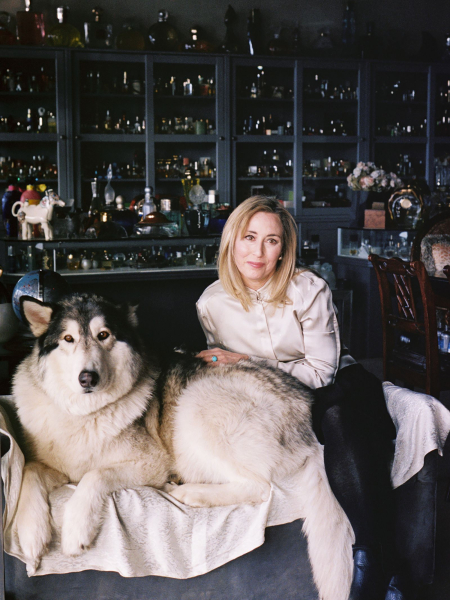
Menard with Oliver, her Northern Breed. (Menard also runs a rescue program called The Lupine Canine.)
Neuroscientists agree. A peer-reviewed study conducted at the National Institute for Physiological Sciences in Japan in 2011 found that odor-evoked autobiographical memories are more emotionally potent than those triggered by other senses, due to the smell’s direct neural connections to the amygdala, the brain’s emotional center. The same study detailed immediate physiological responses to fragrance, including changes in heart rate and emotional arousal, before conscious recognition set in.
A single note can bring someone back 30 years. It’s why Menard insists that fragrance isn’t retail work; it’s emotional work. “This isn’t about perfume. It’s about the architecture of the brain. Scent is the fastest way back to someone you’ve loved or lost.” And that’s why people react before they even realize what they’re smelling. The body remembers before the brain does.
“This isn’t about perfume. It’s about the architecture of the brain. Scent is the fastest way back to someone you’ve loved or lost.”
If the Fragrance Vault is a sanctuary for memory, its rituals begin long before a single scent is sprayed. An hour before opening, Menard moves quietly through her shop. Oliver, her rescue Northern Breed (think husky), lumbers behind her, shadowing her every step. Morning light spills across the room, and she moves quickly to block it, draping a heavy blanket over a glass case—one of several daily gestures meant to protect her most delicate bottles. She zips up her sweater against the chill; the store is kept at 60 degrees for the purposes of preservation. She tells visitors to bring a jacket. “Every bottle here has a lifespan. My job is to give it the longest one possible,” Menard says.
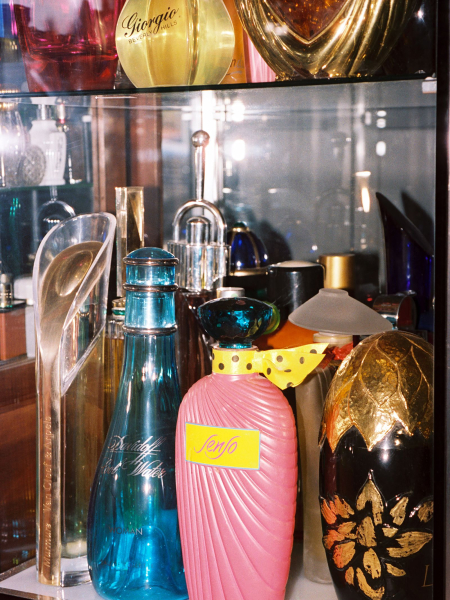
Walking into the Fragrance Vault feels nothing like stepping into a fragrance store. There are no aisles, no tester strips scattered across countertops. Each of the glass cases houses its own small universe of scent: vintage masterpieces, long-discontinued archival bottles, artisanal blends, niche houses, designer scents. You can ask to smell almost anything, but not everything is for sale.
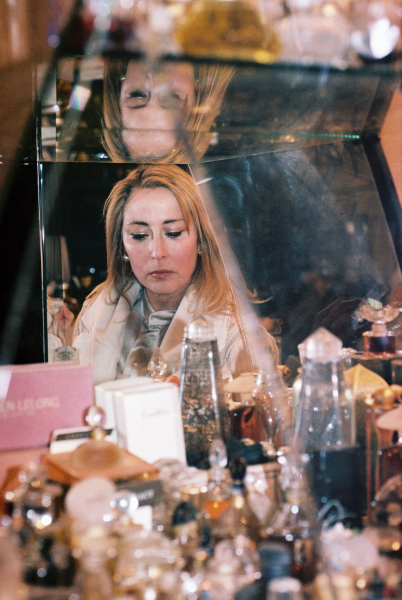
Menard considers herself a “guardian” of the more than 6,000 bottles inside her shop.
In the back left corner sits the tallest case in the shop, almost always draped under a thick, heavy blanket. Only Menard is allowed to lift it. Inside are some of her most fragile and historically significant bottles: Shiseido Nombre Noir (a short-lived favorite discontinued in 1984 due to production costs), a first-edition Niki de Saint Phalle perfume from 1982, and other rarities she refuses to expose to unnecessary light.
“People come in expecting a perfume store. They don’t expect a portal,” Menard tells me. When you enter The Fragrance Vault, before you even take in the shelves, a sign instructs you not to touch or spray anything. Only Menard or a trained staff member handles the bottles. The room unfolds like a map of scent history, from archival treasures like that bottle of Roger & Gallet’s 1894 Vera Violetta (which she’ll “never crack open”), to modern French favorites like Parfums de Gabor and Les Indemodables, to ‘90s hits like CK Eternity, to entire niche portfolios like Zoologist and indie perfumers including Darren Alan and Grossmith London (for whom Menard is the only U.S. stockist). The most expensive bottles in the shop are part of Grossmith’s Classic Collection—Hasu-no-Hana, Phul-Nana, and Shem-el-Nessim—meticulously remastered from the house’s original formulas launched in 1888, 1891, and 1906, and priced around $760 per bottle. Menard herself is unfazed by price. “I’m pretty cheap,” she says with a laugh, estimating that the most she’s ever paid for a single bottle is around $1,000.
Perfumers often send her prototypes before launch, trusting her nose enough to evaluate formulas that haven’t left the lab. Some of her rarest bottles come from estate sales–almost always in Florida, she says. They come from the vanities of women who, as she says, “couldn’t imagine a life without that fragrance.”
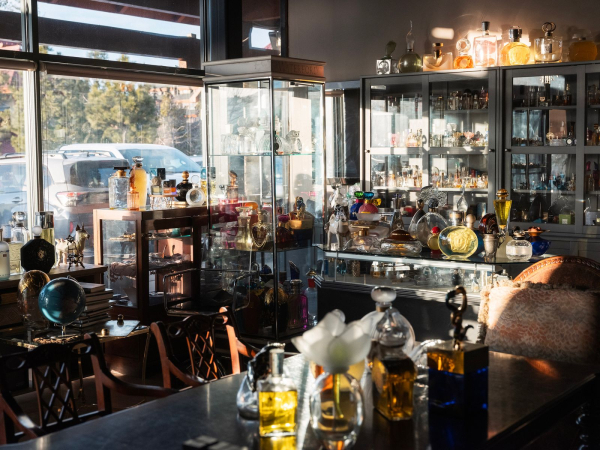
A closer look at the cabinets that line the shop walls. Menard often drapes blankets over those containing the rarest scents in an effort to protect them from harsh light, which can degrade perfumes over time.
A Life Shaped by Scent
The Fragrance Vault has existed for 15 years, but Menard, 58, says fragrance has threaded through her life for far longer than that. She isn’t formally trained in perfumery. Her expertise comes from lived experience, curiosity, and a lifetime spent searching for beauty wherever she could find it.
“I grew up poor…like dirt poor, like the kid who doesn’t have friends and doesn’t have heat and sometimes doesn’t have running water,” she says of her childhood in rural Rhode Island. Beauty wasn’t encouraged; it was restricted. Makeup, jewelry, and nice clothes were off-limits or simply out of reach. Fragrance became her way in, and a lifeline. She collected Avon mini perfumes—tiny glass bottles shaped like dolls—and began assembling a private language of glamour.
Her grandmother deepened that education. An Italian factory worker who never had much money, she was, Menard says, “the blingiest of the blingiest.” She wore Tatiana by Diane von Furstenberg and other drugstore classics. Menard’s grandmother always looked polished, and always smelled good. “She taught me that you could be glamorous without being rich,” Menard says. “That you could decide who you were.”
As a teenager, Menard began buying fragrance with her own money, earned from waitressing at an ice cream shop. Lauren by Ralph Lauren. Paris by Yves Saint Laurent. Laguna by Salvador Dali. Maxime’s de Paris—the perfume of a Parisian cabaret she had never been to, but wore anyway because it made her feel exquisite. For Menard, scent wasn’t just about smelling nice; it was about becoming someone else, a way to shape herself beyond the circumstances she was born into.
One fragrance really crystallized that idea for her. Through a fragrance swap group, she encountered what she now knows is the perfume created by Catherine Deneuve—eponymously called Deneuve. “I remember smelling it and thinking, That’s what elegance smells like,” Menard says. “I didn’t even know what it was, but it felt like a different life. Like possibility.” Already discontinued by then, the fragrance became a compass, a vision of femininity and self-possession she could aim for herself. Scent became a private form of escape, then identity, and eventually, purpose.
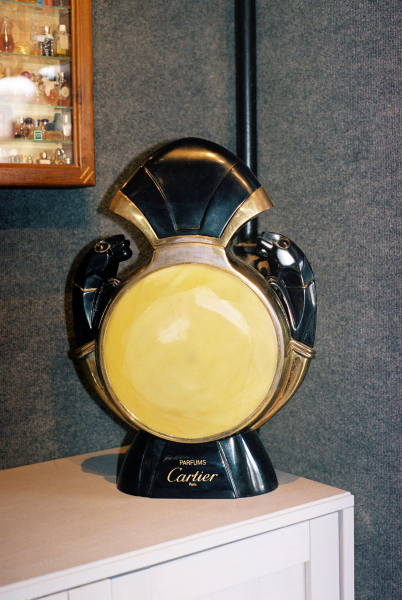
This oversized bottle of Panthere de Cartier is the largest in the shop.
Before making perfume her actual job, Menard studied Russian language, history, and culture at Smith College, later pursuing graduate work in international affairs and Soviet politics, with a focus on women. She moved to San Francisco and worked at Nevska Gallery, which specializes in Russian art, while also volunteering with animals. Menard moved to South Lake Tahoe with her daughter in 2006, drawn to the landscape and the chance to build The Lupine Canine, a Northern Breed rescue program that she still runs today. Living in a small mountain town, fragrance became a lifeline again. Cut off from many cultural experiences, she began ordering books on perfume and organic chemistry, acquiring vintage bottles, and immersing herself in scent.
Perfume wasn’t part of her career plan until she began working part-time for a couple who owned a small fragrance shop. When they retired in 2012, they sold it to her, and she later relocated it to its current home. While cataloging the bottles her former bosses left behind, she began to understand what she was really inheriting. She wasn’t just looking at inventory. Menard was holding stories, formulas as tiny time capsules and lives preserved in glass.
Today, perfumers from around the world make pilgrimages to her mountainside archive for research; collectors travel there for a few milliliters of rare formulas; and visitors arrive searching for discontinued must-haves, a new signature scent, or—like me—simply to explore. The vast majority of the people who walk through the doors of The Fragrance Vault come from outside South Lake Tahoe. Menard estimates that only about eight percent of her clientele is local.
Those local clients, she says, are cherished. Many work blue-collar jobs in nearby casinos, ski resorts, or golf courses, and the shop makes a point of meeting them where they are, offering local discounts and even cash layaway for customers without credit cards. “They deserve to feel special and fancy,” Menard says. In recent years, it’s also not uncommon for University of Reno athletes to come by together after practice to sample colognes.
She welcomes everyone, but she remains clear-eyed about intention: “Collectors who only care about scarcity lose the point,” she says. “Perfume is meant to live on the skin.”
Gregory Gersch, a longtime client from Silver Spring, Maryland, describes Menard as “indispensable” to him and his family, particularly his 95-year-old mother. “She’s a combination of Sherlock Holmes and Jeeves,” he says. “She can track down anything, stays ahead of what’s new and exceptional, and doesn’t just remember what you want—she anticipates it.” What distinguishes Menard most, he adds, is the care behind the process. “Jana commits every detail of your dossier to memory and consistently presents a thoughtful menu of both new and classic options that hit the mark.”
“She’s a combination of Sherlock Holmes and Jeeves. She can track down anything… and anticipates what you want.”
For perfumers, the Fragrance Vault functions less like a showroom and more like a sounding board. Independent perfumer Will Southard, the founder of Third Eye Fragrance, recalls sending Menard early prototypes and expecting no more than a yes or no. Instead, he says, “Jana actually took the time to call me and give detailed feedback, not just on the fragrance but on what would help the work live in the world.”
Serbian-American perfumer Boris Zrnic of Boka Fragrance describes a similar experience. “It means the world to place my work with someone who treats perfume as something to be studied and worn, not just collected,” he says. “Jana understands the labor behind each formula and takes pride in explaining that process to her clients.”
I made two visits to the Fragrance Vault, and experienced firsthand how smelling a vintage or discontinued formula is its own ritual. During my visit, I experienced the original Guerlain Shalimar, which celebrated its 100th anniversary last year. Menard had it tucked away in her collection—deep in the back of the store.
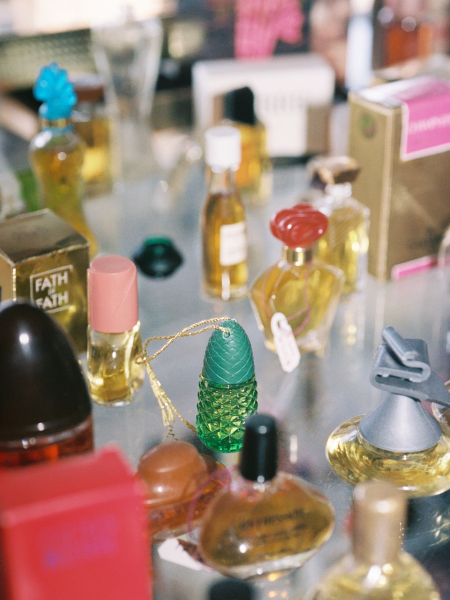
The bottle itself is remarkably intact. The glass is clear and unchipped, its fan-shaped stopper still catching the light. The liquid inside has darkened to a deep amber, evidence of time at work. Only the lettering shows its age. The gold script on the stopper has softened, with the “n” in Guerlain and the word Paris faintly worn. On the Shalimar label, the name remains legible, though the final letters have faded slightly, as if worn away by decades of fingers resting in the same place, again and again.
A staff member sprayed the fragrance for me, and I immediately bought five milliliters for $45. As my vial was labeled using a typewriter, the original bottle was flushed with inert gas, sealed instantly, and returned to its dark room for protection. “People think perfume sits on a shelf, but it’s aging, evolving, breathing,” Menard explains. “Perfume isn’t chemistry, it’s alchemy. Molecules talk to each other. They change each other. A fragrance is never finished—it’s always becoming.”
“Perfume isn’t chemistry, it’s alchemy. A fragrance is never finished—it’s always becoming.”
On my first visit, Menard wasn’t in the store. She was in Seattle, spending time with Zrnic, the perfumer, abroad. Even so, her presence was unmistakable, radiating through her staff. Menard extensively trained her three employees, none of whom arrived as perfume experts. “They all came in as customers first. They were just curious, and they stayed curious,” she says. “That’s the only thing I can’t teach—curiosity.”
Everything else, she teaches through immersion: “We smell everything, we talk about everything, we read, we research, we compare vintages, we compare reformulations. It’s a constant conversation.” She doesn’t want staff repeating marketing notes; she wants them to understand structure, materials, oxidation, evolution…the life cycle of a scent. “They need to be able to listen to someone describe their memories and give them five scents that fit that memory, not five scents that are popular on TikTok.”
A Fight Against Extinction
In addition to nostalgia and scent’s emotional pull, the Fragrance Vault serves a rarer purpose: olfactory preservation in a world where raw materials are vanishing. “We’re losing ingredients faster than we’re learning to protect them,” Menard says matter-of-factly, as if repeating a truth she’s had to accept.
Luca Turin, a biophysicist and longtime fragrance critic, agrees. “Each molecule has a unique smell,” he says. “It’s like a species becoming extinct.” What disappears cannot be recreated exactly, only approximated.
“Climate change has a smell—it’s the absence of scents that aren’t coming back.”
Some losses are botanical. Indian Sandalwood, the rich, creamy, sacred wood that shaped centuries of perfumery, has been over-harvested for decades. It still appears in formulas, but only in tightly controlled amounts, pushing perfumers toward synthetics or alternate strains, like Australian sandalwood, to mimic its scent. The substitutions are elegant, even beautiful, but different. Australian sandalwood leans greener and fresher; synthetic sandalwood has a smoother, more uniform impression in comparison to the textured warmth of the real thing. “People forget that scent comes from living things,” Menard says. “And living things can disappear.”
Other losses are less visible. According to Renaud Salmon, chief creative officer of fragrance brand Amouage, the erosion is often subtle. “It’s not always about disappearance,” he explains. “Very often, it’s about transformation, standardisation, and the quiet erosion of diversity. A formula might not change on paper for decades, but the materials do. And so does the smell.” The result is a slow recalibration of perfumery itself, one that reshapes how fragrances behave, wear, and resonate over time.
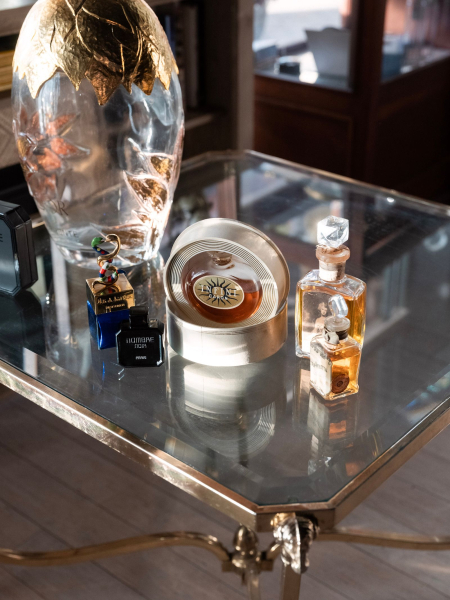
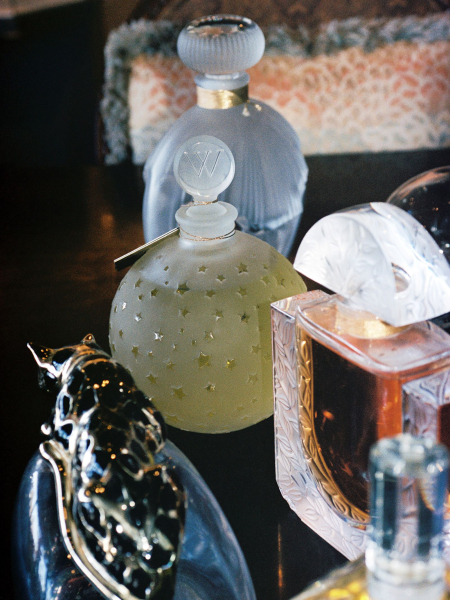
See the bottle on the far right of this image with the tilted square-topped stopper? That’s Vera Violetta by Roger & Gallet, the oldest fragrance in the store, which dates to approximately 1900.
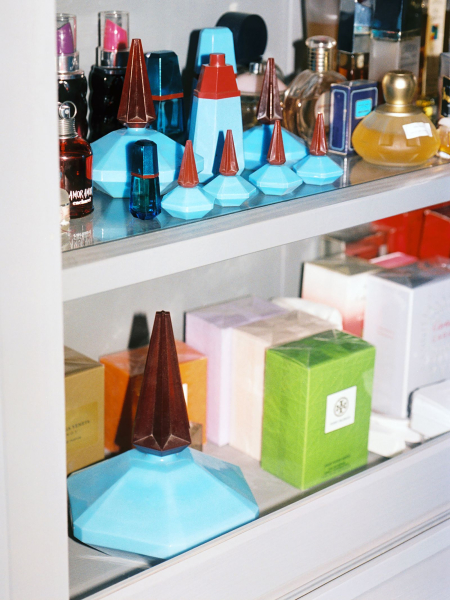
Regulation has accelerated that shift. Ingredients like oakmoss, Lyral, and nitro musks—materials that once defined entire genres—are now restricted or banned because of allergenicity and toxicity concerns, forcing houses to rebuild classics note by note. “Reformulation inevitably alters a fragrance’s architecture,” says Delphine Jelk, director of perfume creation at Guerlain. “When we think of Shalimar, we’re not talking about a product. We’re talking about an olfactory masterpiece.” Preservation, she notes, is always the goal, but the structure can never remain entirely unchanged.
This is why Menard preserves certain bottles instead of selling them. “Climate change has a smell—it’s the absence of scents that aren’t coming back,” Menard warns. At the Fragrance Vault, preservation is not nostalgia for nostalgia’s sake. It is an insistence that scent, like art or language, deserves to be remembered as it once was. “When a formula disappears,” Menard says, “a piece of culture disappears with it.”
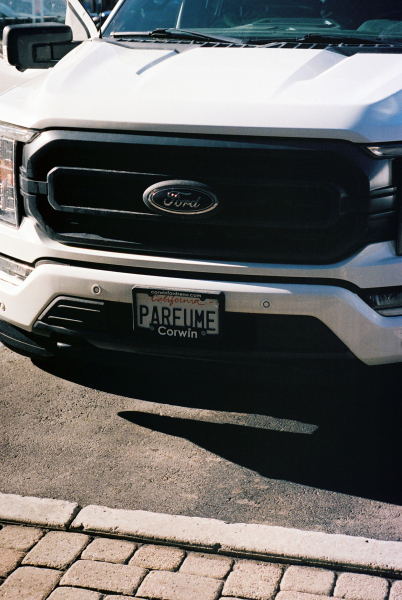
Menard’s license plate says it all.
A Vision for the Future
Menard may be preserving the past, but she’s always looking forward. Her dream acquisitions? The entire Serge Lutens collection—the iconoclastic house whose unisex, narrative-driven fragrances reshaped modern perfumery—and the phantom early Chanel prototypes, “No. 2, No. 3, and the handful that never officially made it to market.” In an age of TikTok hauls and viral blind buys, Menard hopes perfume lovers will return to the artistry and focus on the notes, the craft, and the stories. Perfume, she reminds us, “is about remembering, not owning.”
One day, she hopes to donate her rarest bottles to Osmothéque, the nonprofit fragrance archive in Versailles. Until then, one of the most vast and unique perfume collections in the world already sits improbably in a California strip mall. It’s part sanctuary, part treasure map, and entirely shaped by a woman who has devoted her life to the art of finding what’s worth smelling.